

Recruiting firms use pre-employment assessment tools to verify candidate skills, cognitive ability, and behavioral fit before interviews. These tools reduce time-to-hire and improve placement quality. This guide covers technical testing, cognitive tests, personality assessments, job simulations, and behavioral evaluations used by modern staffing agencies. For additional details, review the Vaultio Hiring Infrastructure for.
Technical Skills Testing
Technical skills testing is the process of evaluating a candidate's ability to perform specific job-related tasks using practical exercises. For engineering and product roles, this is the most critical layer of screening. Traditional static question banks are failing because questions leak quickly into online communities and answer-key marketplaces. Candidates can find solutions before the test even begins, rendering the score meaningless.
Dynamic Assessment Generation
Modern platforms like Vaultio address this by generating unique assessments for every candidate. Instead of pulling from a static bank, the system creates a new test based on the specific job description and the candidate's CV claims. If a CV claims senior React experience, the assessment focuses heavily on React scenarios. This approach ensures that no two candidates receive the same test, eliminating the copy-paste cheating economy.
Server-Side Grading and Integrity
Integrity is maintained through server-side grading. The candidate's browser never sees the correct answers or hidden test cases. When submitted, code runs against an authoritative test runner. While this does not eliminate all cheating, it provides integrity signals such as tab-switching detection and copy-paste blocking. These flags help recruiters identify candidates who may have relied on external help, allowing for a more informed interview decision.
Cognitive Ability Tests
Cognitive ability tests are standardized evaluations designed to measure a candidate's reasoning, problem-solving, and learning capacity. These tests are role-agnostic, meaning they assess general mental aptitude rather than specific technical skills. They are particularly useful for entry-level roles or positions where specific technical experience is less critical than the ability to learn new systems quickly.
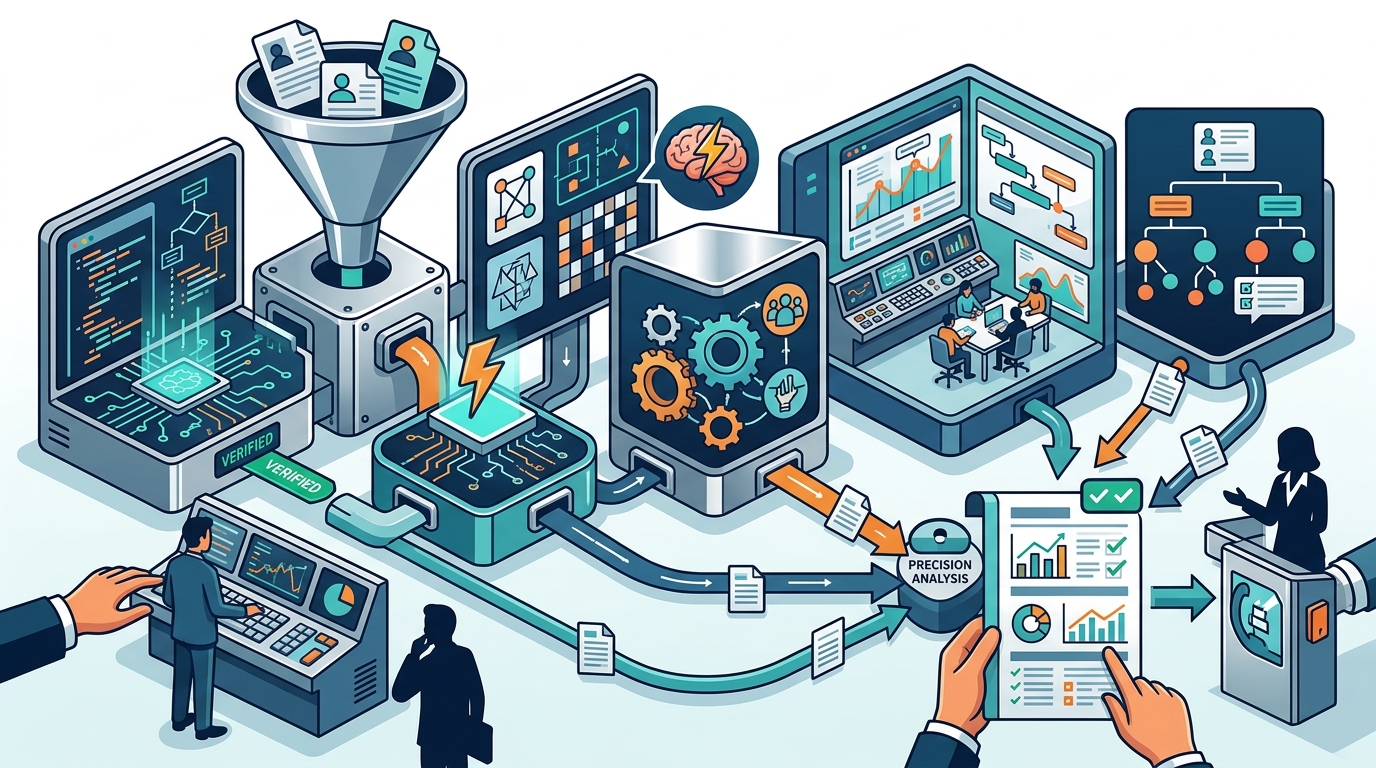
Types of Cognitive Tests
Integration with Technical Screening
Recruiting firms often use cognitive tests as a first-pass filter. A candidate who scores poorly on cognitive ability may struggle to learn complex technical stacks, regardless of their current skill level. However, cognitive tests should not be the sole metric for senior roles. They are best used in conjunction with technical skills testing to provide a holistic view of a candidate's potential.
Personality Assessments
Personality assessments are psychometric tools that evaluate a candidate's behavioral traits, work style, and cultural fit. These tests do not measure right or wrong answers. Instead, they provide insights into how a candidate is likely to behave in a team environment. For recruiting firms, this is crucial for matching candidates to clients whose cultures vary significantly.
Common Frameworks
Popular frameworks include the Big Five (OCEAN), DISC, and Myers-Briggs Type Indicator (MBTI). The Big Five measures openness, conscientiousness, extraversion, agreeableness, and neuroticism. DISC focuses on dominance, influence, steadiness, and conscientiousness. These tools help recruiters predict how a candidate will handle conflict, stress, and collaboration.
Limitations and Bias
Personality assessments are decision-support tools, not definitive predictors of performance. They should be used to inform conversations, not to automatically reject candidates. Recruiters must be aware of potential biases in these tests and ensure they are used ethically. A candidate with a different personality type may still be an excellent fit for a specific role if their skills align with the job requirements.
Job Simulations
Job simulations are practical exercises that mimic real-world tasks a candidate would perform in the role. Unlike multiple-choice tests, simulations require candidates to produce actual work products, such as writing code, designing a marketing campaign, or analyzing a dataset. This provides direct evidence of a candidate's ability to deliver results.
Production-Style Scenarios
High-quality job simulations use production-style scenarios with weighted rubrics. For example, a backend developer might be asked to debug a complex issue in a distributed system. The assessment evaluates not just the final solution, but the approach, code quality, and documentation. This gives recruiters a clear view of the candidate's problem-solving process and attention to detail.
Time-Boxed Challenges
Simulations are often time-boxed to reflect real-world constraints. Candidates must prioritize tasks and manage their time effectively. This reveals how a candidate performs under pressure and whether they can deliver high-quality work within deadlines. For recruiting firms, this is a strong indicator of a candidate's readiness for immediate contribution.
Behavioral Evaluations
Behavioral evaluations are structured interviews or assessments that ask candidates to describe past experiences and how they handled specific situations. These evaluations are based on the premise that past behavior is the best predictor of future behavior. They help recruiters understand a candidate's decision-making process, leadership style, and conflict resolution skills.
Structured vs. Unstructured
Structured behavioral evaluations use a standardized set of questions for all candidates. This ensures consistency and reduces bias. Unstructured evaluations are more conversational and allow for deeper exploration of specific topics. Recruiting firms often use a hybrid approach, starting with structured questions and then diving deeper into areas of interest.
Integration with Assessment Data
Behavioral evaluations are most effective when combined with assessment data. If a candidate scores highly on technical skills but struggles with behavioral questions, it may indicate a gap in soft skills or cultural fit. Conversely, a candidate with strong behavioral responses but weak technical scores may need more training. This holistic approach helps recruiting firms make more informed placement decisions.
Comparison of Assessment Types
| Assessment Type | Primary Purpose | Best For | Limitations |
|---|---|---|---|
| Technical Skills Testing | Verify specific job-related skills | Engineering, Product, Data Roles | Requires role-specific customization |
| Cognitive Ability Tests | Measure general reasoning and learning capacity | Entry-Level, Generalist Roles | Does not measure specific skills |
| Personality Assessments | Evaluate behavioral traits and cultural fit | Team-Based, Client-Facing Roles | Subjective, potential for bias |
| Job Simulations | Assess ability to perform real-world tasks | Senior, Specialized Roles | Time-consuming for candidates |
| Behavioral Evaluations | Understand past behavior and decision-making | Leadership, Management Roles | Relies on self-reporting |
Key Takeaways
- Technical skills testing is the most critical layer for verifying candidate ability in specialized roles.
- Dynamic assessment generation prevents question leakage and ensures fair evaluation.
- Cognitive ability tests provide a baseline for learning capacity but should not be the sole metric.
- Job simulations offer direct evidence of a candidate's ability to deliver real-world results.
- Behavioral evaluations reveal how candidates handle past situations, predicting future behavior.
- Combining multiple assessment types provides a holistic view of candidate fit.
- Integrity signals flag potential cheating but do not eliminate it entirely.
Frequently Asked Questions
What is the most effective pre-employment assessment tool?
There is no single most effective tool. The best approach combines technical skills testing, cognitive ability tests, and behavioral evaluations to provide a holistic view of candidate fit.
How do dynamic assessments prevent cheating?
Dynamic assessments generate unique questions for each candidate, making it impossible to share answers. Server-side grading and integrity signals further reduce the risk of cheating.
Are personality assessments reliable?
Personality assessments provide insights into behavioral traits but are not definitive predictors of performance. They should be used as decision-support tools, not to automatically reject candidates.
What is the difference between job simulations and technical tests?
Job simulations mimic real-world tasks and require candidates to produce actual work products. Technical tests often use multiple-choice questions or coding challenges that may not reflect real-world complexity.
How long do pre-employment assessments take?
Assessment duration varies by type. Cognitive tests may take 30-60 minutes, while job simulations can take several hours. Technical tests typically range from 1 to 3 hours.
Can assessments replace interviews?
No, assessments should complement interviews, not replace them. Interviews provide context and allow for deeper exploration of a candidate's experience and motivation.
How do recruiting firms use assessment data?
Recruiting firms use assessment data to rank candidates, identify strengths and gaps, and make informed placement decisions. This reduces time-to-hire and improves client satisfaction.
What are integrity signals in assessments?
Integrity signals are flags that indicate potential cheating, such as tab-switching or copy-paste events. These signals help recruiters identify candidates who may have relied on external help.
Conclusion
Pre-employment assessment tools are essential for recruiting firms seeking to improve placement quality and reduce time-to-hire. By combining technical skills testing, cognitive ability tests, personality assessments, job simulations, and behavioral evaluations, firms can gain a holistic view of candidate fit. Vaultio offers dynamic, role-specific assessments that provide evidence-based insights into candidate abilities. To explore how assessment-first hiring can transform your workflow, visit the Vaultio for Companies page.