

Remote hiring requires proof of ability, not just polished resumes. Platforms like Vaultio verify developer skills by generating role-specific assessments that test actual coding and problem-solving capabilities. This guide covers the landscape of coding assessment platforms, how they work, and how to choose the right tool for your remote hiring pipeline.
Coding Assessment Platforms
Developer assessment platforms are software tools that evaluate technical skills through structured tests, coding challenges, and scenario-based problems. These platforms have become essential for remote hiring because they provide objective data on a candidate's abilities, reducing the reliance on subjective resume screening. The market includes several established players, each with a different approach to testing.
Major Players in the Market
Several platforms dominate the developer assessment space. HackerRank is widely known for its extensive library of coding challenges and competitive programming contests. Codility focuses on algorithmic problem-solving and is often used for high-volume screening. TestGorilla offers a broad range of skill tests, including coding, logic, and personality assessments. CodeSignal provides automated coding tests and is integrated with many Applicant Tracking Systems (ATS). Unberry specializes in practical, job-specific coding tests that mimic real-world tasks.
Each of these platforms serves a specific need. Some are better for high-volume screening, while others are designed for deep technical evaluation. The choice depends on your hiring volume, the specific skills you need to verify, and your integration requirements.
The Role of AI in Modern Assessments
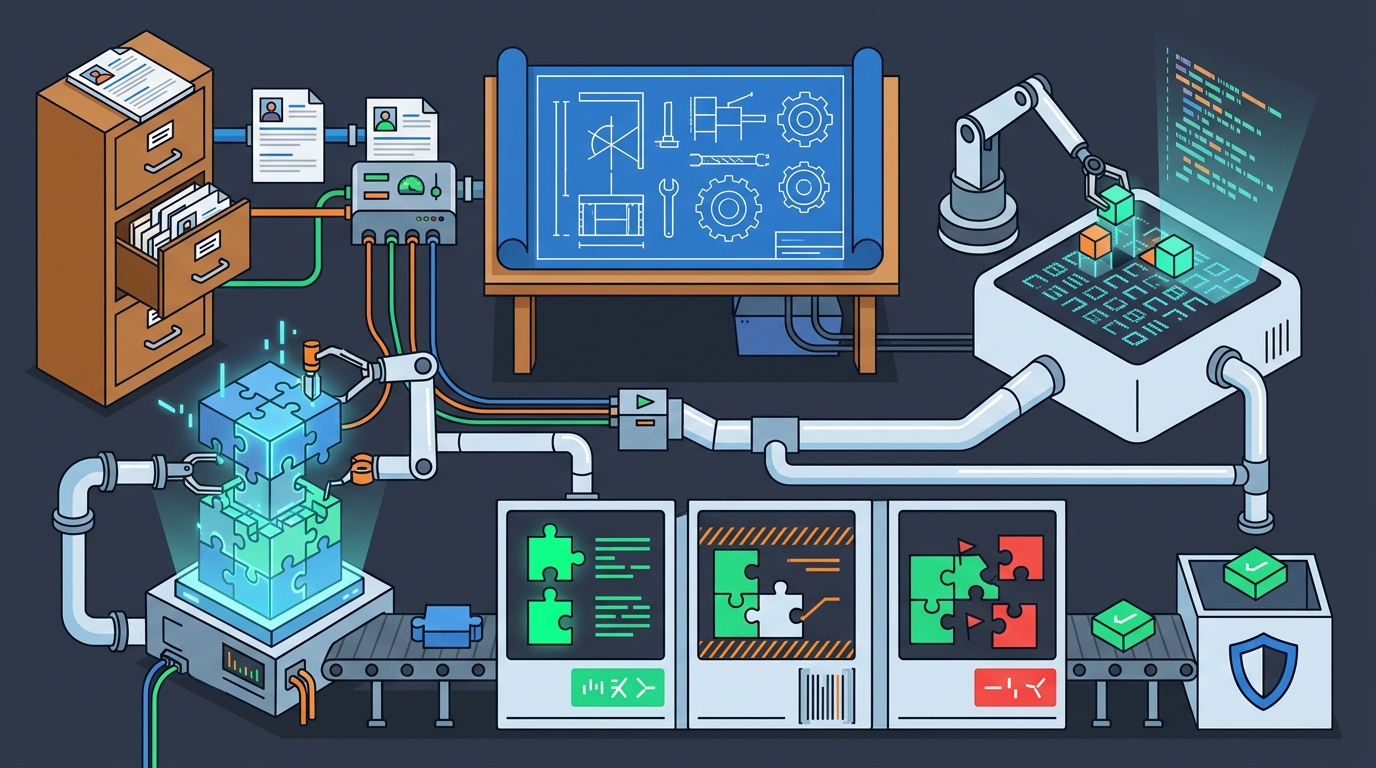
Modern assessment platforms increasingly use AI to generate and grade tests. This allows for more personalized and adaptive assessments. For example, Vaultio uses AI to generate unique assessments for each candidate based on their CV and the specific role requirements. This approach helps prevent cheating and ensures that the test is relevant to the candidate's claimed experience.
How Developer Assessments Work
Developer assessments typically involve a combination of multiple-choice questions, coding problems, and scenario-based tasks. The goal is to evaluate a candidate's ability to solve problems, write clean code, and think critically. The process usually starts with a screening phase, where candidates complete a timed test. Based on their performance, they may be invited to a more in-depth technical interview.
Types of Assessment Questions
Grading and Scoring
Grading can be automated or manual. Automated grading is common for coding problems, where the platform runs the candidate's code against a set of test cases. This provides an objective score based on correctness, efficiency, and code quality. Manual grading is often used for scenario-based tasks, where a human reviewer evaluates the candidate's solution. Some platforms use a combination of both, with AI-assisted grading for coding problems and human review for more complex tasks.
Choosing the Right Platform
Key Factors to Consider
When evaluating platforms, consider the following factors. Question Library: Does the platform offer a wide range of questions that cover the skills you need to verify? Customization: Can you create custom questions or tailor existing ones to your specific needs? Integration: Does the platform integrate with your ATS and other hiring tools? Cost: What is the pricing model, and does it fit your budget? Support: What kind of support does the platform offer?
Comparison of Popular Platforms
| Platform | Focus | Key Features | Best For |
|---|---|---|---|
| HackerRank | Algorithmic Problem-Solving | Extensive question library, competitive programming | High-volume screening |
| Codility | Algorithmic Problem-Solving | Automated grading, large question bank | Large-scale hiring |
| TestGorilla | Broad Skill Assessment | Coding, logic, personality tests | General skill screening |
| CodeSignal | Automated Coding Tests | ATS integration, automated grading | Streamlined hiring pipelines |
| Unberry | Practical Coding Tests | Job-specific tasks, real-world scenarios | Practical skill verification |
| Vaultio | Role-Specific Assessments | AI-generated unique tests, CV-aware generation | Personalized skill verification |
Key Takeaways
- Developer assessment platforms provide objective data on a candidate's technical skills, reducing reliance on subjective resume screening.
- Major platforms include HackerRank, Codility, TestGorilla, CodeSignal, and Unberry, each with a different focus and approach.
- Modern platforms increasingly use AI to generate and grade tests, allowing for more personalized and adaptive assessments.
- Assessments typically involve a combination of multiple-choice questions, coding problems, and scenario-based tasks.
- Grading can be automated or manual, with automated grading common for coding problems and manual grading often used for scenario-based tasks.
- Choosing the right platform depends on your hiring volume, specific skill needs, budget, and integration requirements.
- Consider factors such as question library, customization, integration, cost, and support when evaluating platforms.
- AI-generated assessments, like those offered by Vaultio, can help prevent cheating and ensure test relevance.
Frequently Asked Questions
What is a developer assessment platform?
A developer assessment platform is a software tool that evaluates technical skills through structured tests, coding challenges, and scenario-based problems.
How do developer assessments work?
Developer assessments typically involve a combination of multiple-choice questions, coding problems, and scenario-based tasks. The goal is to evaluate a candidate's ability to solve problems, write clean code, and think critically.
What are the major developer assessment platforms?
Major platforms include HackerRank, Codility, TestGorilla, CodeSignal, and Unberry. Each has a different focus and approach to testing.
How does AI play a role in modern assessments?
Modern assessment platforms increasingly use AI to generate and grade tests. This allows for more personalized and adaptive assessments.
What types of questions are included in developer assessments?
Most platforms offer a variety of question types, including multiple-choice questions, coding problems, and scenario-based tasks.
How are developer assessments graded?
Grading can be automated or manual. Automated grading is common for coding problems, while manual grading is often used for scenario-based tasks.
How do I choose the right assessment platform?
Selecting the right assessment platform depends on several factors, including your hiring volume, specific skill needs, budget, and integration requirements.
What factors should I consider when evaluating platforms?
When evaluating platforms, consider factors such as question library, customization, integration, cost, and support.
Conclusion
Choosing the right developer assessment platform is a critical step in building a strong remote team. By understanding the different types of platforms and how they work, you can make an informed decision that fits your specific needs. Whether you are a startup or an enterprise, there is a platform that can help you verify developer skills and make better hiring decisions. Vaultio offers a unique approach to developer assessment, using AI to generate role-specific tests that provide a clear picture of a candidate's abilities. Explore the platform to see how it can transform your hiring process.