

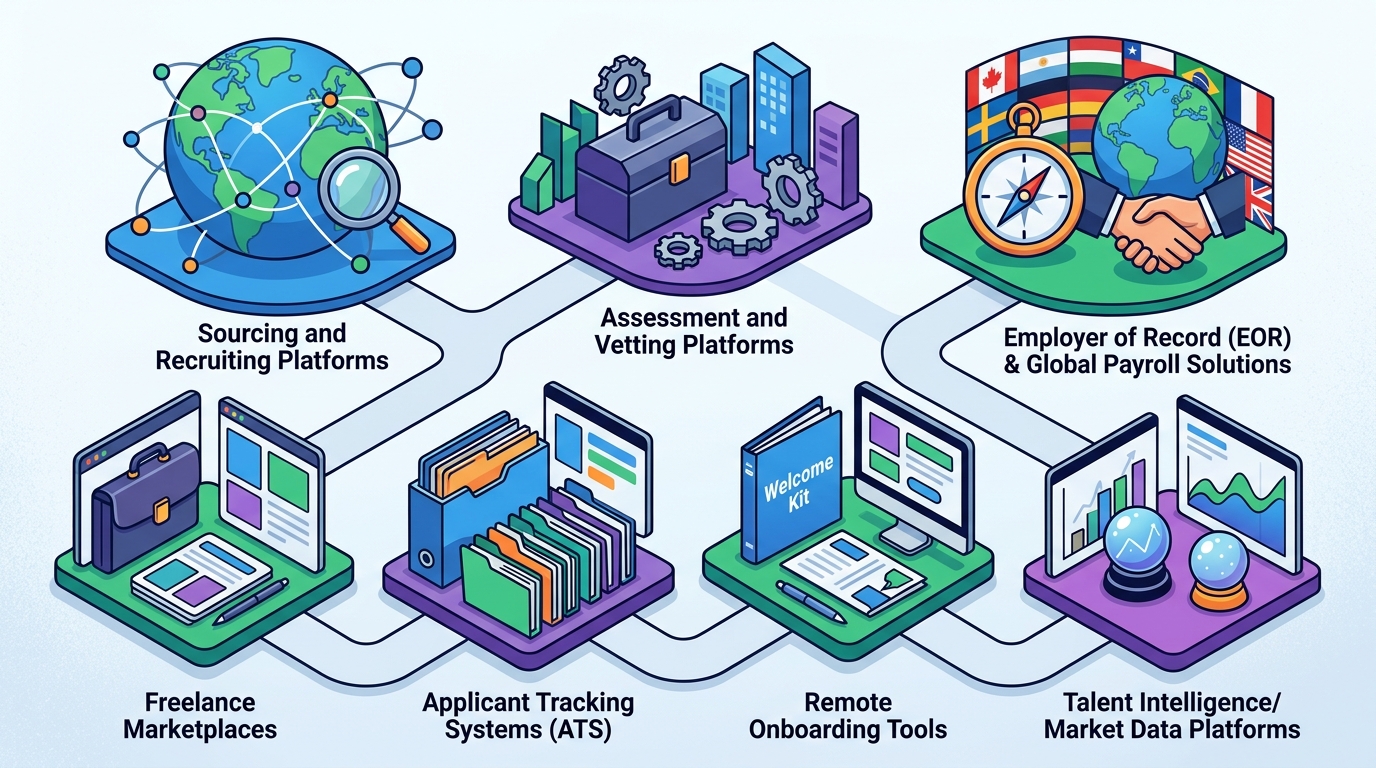
Companies hire remote talent using specialized platforms that streamline sourcing, vetting, and compliance. The right tool depends on whether you need a full talent marketplace, a developer-specific assessment engine, or a global payroll solution. This guide breaks down the seven primary categories of remote hiring infrastructure. It explains how each category functions, who benefits most, and how to build a robust hiring stack for distributed teams. according to Remote Work Initiative
Remote Hiring Platforms
Core Functionality
Most general remote hiring platforms focus on broad talent pools. They allow companies to post roles and receive applications from candidates in different time zones. The value proposition here is volume and reach. Companies can find candidates in regions where local talent is scarce or expensive. For additional details, review the Vaultio Hiring Infrastructure for.
Limitations of General Platforms
While broad reach is beneficial, general platforms often lack deep technical vetting. Recruiters must spend significant time filtering through unverified resumes. This creates a bottleneck in the early stages of the hiring funnel. Without structured assessment data, hiring managers rely heavily on interviews to gauge technical proficiency, which is time-intensive. For additional details, review the Vaultio Hiring Infrastructure for.
Freelance Marketplaces
Freelance marketplaces are platforms that facilitate short-term, project-based engagements between clients and independent contractors. These platforms are ideal for companies that need flexible capacity without the overhead of full-time employment. They operate on a transactional model where clients hire for specific deliverables.
Use Cases for Startups
Seed and Series A startups often use freelance marketplaces to build initial product teams. This allows them to test technical hypotheses without long-term financial commitments. However, transitioning from freelance contractors to full-time employees requires a separate hiring process. The skills demonstrated in a short project may not reflect long-term reliability or cultural fit.
Quality Control Challenges
Quality control on open freelance marketplaces can be inconsistent. Ratings and reviews provide some signal, but they are often subjective. Companies must implement their own vetting processes to ensure that freelance work meets internal standards. This adds an extra layer of management overhead that many early-stage teams underestimate.
Vetted Developer Networks
Vetted developer networks are curated communities of software engineers who have passed rigorous technical screening before joining the platform. These networks reduce the noise in the hiring process by pre-filtering candidates based on coding ability and problem-solving skills. They act as a quality gate before candidates ever reach a company's recruiter.
The Pre-Screening Advantage
By joining a vetted network, candidates signal a certain baseline of competence. This allows hiring teams to focus on higher-level discussions about architecture and system design. The time saved in initial screening is substantial. Recruiters can move directly to technical interviews with candidates who have already demonstrated their core skills.
Network Size and Diversity
Developer Specific Platforms
Assessment Types
Integration with Hiring Workflows
Modern developer platforms integrate with applicant tracking systems (ATS) and recruiting software. This allows assessment results to flow directly into candidate profiles. Hiring managers can view performance metrics alongside other application data. This integration reduces manual data entry and ensures that technical scores are not lost in the process.
Vetted Talent Marketplaces
Cross-Functional Hiring
Startups often need to hire for roles beyond engineering. Product managers, designers, and marketers are critical to product success. Vetted talent marketplaces provide access to these roles with a similar level of pre-screening. This allows companies to build a complete team from a single platform, reducing the need to manage multiple vendor relationships.
Role-Specific Screening
The key differentiator in these marketplaces is the depth of role-specific screening. A strong marketplace will have distinct assessment criteria for a product manager versus a backend engineer. This ensures that candidates are evaluated on the skills relevant to their specific function. It prevents the common issue of hiring a strong engineer who lacks product sense.
Developer Vetting Assessments
Developer vetting assessments are software tools that generate role-specific tests based on job requirements and candidate resumes. These tools analyze the specific claims a candidate makes in their CV and create targeted questions to verify those claims. The result is a report on what the candidate actually demonstrated, their strengths, and their gaps.
How Dynamic Assessments Work
Strengths and Gaps Reporting
International Payroll Compliance
International payroll compliance is the process of ensuring that remote employees are paid correctly and legally in their respective countries. This involves navigating local tax laws, labor regulations, and data protection requirements. For companies hiring globally, this is a critical operational challenge.
Employer of Record (EOR) Solutions
Many companies use Employer of Record (EOR) services to manage international hiring. An EOR acts as the legal employer in the foreign country, handling payroll, taxes, and benefits. This allows companies to hire remote talent without setting up local legal entities. It simplifies compliance but adds a layer of cost and dependency on a third-party provider.
Data Protection and Privacy
Key Takeaways
- Remote hiring platforms provide broad reach but often lack deep technical vetting.
- Freelance marketplaces are best for short-term, project-based needs rather than long-term team building.
- Vetted developer networks reduce screening time by pre-filtering candidates based on technical skills.
- Vetted talent marketplaces are ideal for building cross-functional teams across engineering, product, and marketing. according to Marketing Strategies Gig
- Dynamic assessment tools generate role-specific tests based on candidate resumes, providing targeted verification of claims.
- International payroll compliance requires careful navigation of local laws, often necessitating EOR services.
Frequently Asked Questions
What is the best platform for hiring remote engineers?
The best platform depends on your specific needs. For high-volume hiring, developer specific platforms with automated assessments are effective. For smaller, more curated teams, vetted developer networks may be preferable. The key is to choose a platform that aligns with your technical stack and hiring volume.
How do dynamic assessments differ from static coding tests?
Static coding tests use a fixed set of questions for all candidates. Dynamic assessments generate questions based on the candidate's specific resume and the job requirements. This ensures that the test is relevant to the candidate's actual experience, providing a more accurate picture of their skills.
Can assessment reports replace interviews?
What is an Employer of Record (EOR)?
An Employer of Record is a third-party service that acts as the legal employer for remote workers in foreign countries. It handles payroll, taxes, and benefits compliance. This allows companies to hire internationally without setting up local legal entities.
How do I ensure data privacy when using assessment platforms?
You should verify that the platform complies with relevant data protection laws, such as GDPR. Look for information on how they store and process candidate data. Ensure that they have clear data retention policies and that candidates are informed about how their data will be used.
Are vetted talent marketplaces suitable for non-technical roles?
What is the role of integrity signals in assessments?
Integrity signals are flags that indicate potential issues during an assessment, such as unusual behavior or inconsistent answers. They are not proof of cheating but rather indicators that may warrant further investigation. Hiring managers should use these signals as part of a broader evaluation, not as a definitive judgment.
How do I choose between a freelance marketplace and a full-time hiring platform?
Choose a freelance marketplace if you need short-term, project-based help. Choose a full-time hiring platform if you are building a long-term team. Consider the nature of the work, the level of integration required, and your long-term staffing needs when making this decision.
Conclusion
Selecting the right remote hiring platform is a strategic decision that impacts your team's quality and speed. By understanding the distinct roles of marketplaces, networks, and assessment tools, you can build a robust hiring stack. Vaultio provides the assessment layer that verifies candidate claims, ensuring that your interview time is spent on candidates who have demonstrated the skills you need. To explore how dynamic assessments can streamline your remote hiring process, visit the Vaultio guide. according to Remote Work Initiative